Self-Reliant Diver
Take the ultimate step in dive mastery and independence! While diving with a buddy is the standard, there are times when you need to be entirely self-sufficient—whether you are an avid underwater photographer, a videographer, or a dive professional. The PADI Self-Reliant Diver course teaches you how to safely plan and execute dives without a partner, focusing heavily on dive planning, gas management, and equipment redundancy.
Course Details
- Become Self-Sufficient: Learn the philosophy of diving without a buddy, including how to calculate your Surface Air Consumption (SAC) rate, manage redundant gas supplies, and handle emergencies on your own.
- Dynamic Learning: Combine independent study with 2 challenging days of practical planning and 3 open water ocean dives.
- Expert Instructors: Learn from highly experienced professionals who will put your skills to the test, guiding you through problem-solving and rigorous gear checks.
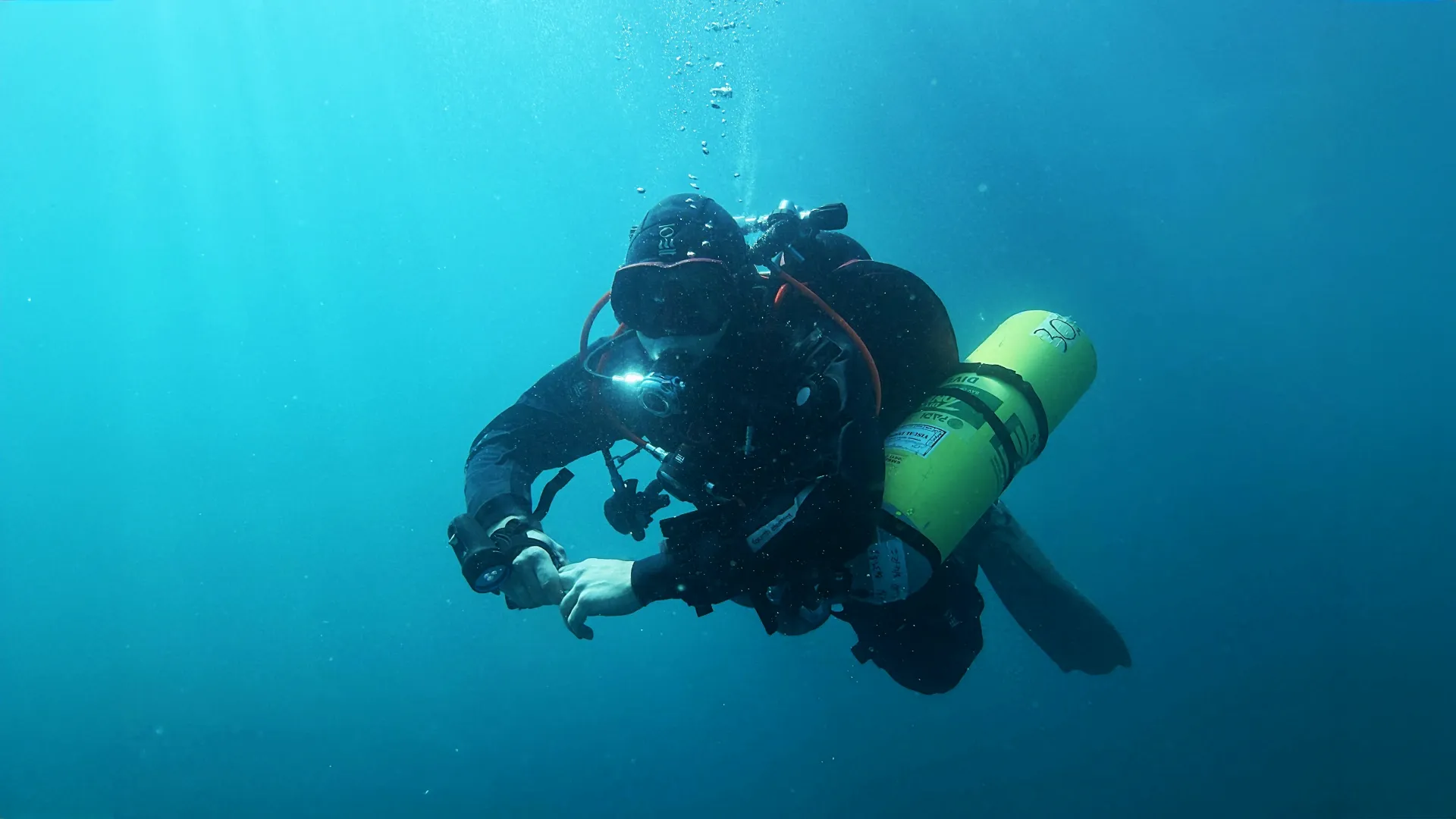
- Gear Not Included: You will need all the standard diving equipment and the mandatory redundant gear required for this course (pony bottles, backup computers, extra DSMBs). Check out our range here.
- Discount on Gear: Take advantage of 10% off storewide (Computers and Drysuits receive 5% off) while enrolled in the course—the perfect time to start building your own self-reliant kit!
Prerequisites: Advanced Diver or equivalent AND have a minimum of 100 logged dives.
Please ensure you have read our Terms & Conditions and Risk Disclosure and filled out the Medical & liability Forms before booking
Next Course Date
Availability: Contact us for booking information
What to expect on your course
Before the course - Complete your eLearning
When you sign up, you'll receive your PADI Self-Reliant Diver materials. This specialty involves high-level dive theory. You'll learn about the philosophy of self-reliance, detailed gas management, configuring redundant equipment (like pony bottles and twinsets), and emergency response without a buddy. You can study at your own pace from the comfort of your home. While smartphones work fine, a computer or tablet with a larger screen will enhance your learning experience.
You'll need to complete all the knowledge development sections before we hit the water. If you encounter any issues or need assistance, just give us a call—we're here to help!
Day 1 - Gas Planning and Dive 1
We meet at the dive shop at 8 am. Before we even look at the water, we will sit down to complete a detailed dive plan, specifically calculating your SAC rate and determining your turn pressures based on the rule of thirds.
Next, you will learn how to rig your redundant air source (usually a pony bottle) and configure your extra dive computer, mask, and DSMB. For Dive 1, we typically head to a calm, local site. Your instructor will first conduct a rigorous skills assessment to ensure your foundational scuba skills are up to the standard required for solo diving. Then, we will swim at a set depth to calculate your actual SAC rate and practice switching to your redundant air supply while hovering.
Day 2 - Dives 2 & 3
On Day 2, we usually head out on our boat, Rika Maru, to put your independent skills to the test in different environments.
During Dives 2 and 3, you will execute the dives exactly as you planned them. Your instructor will be there to evaluate you, but you will act as if you are completely on your own. You will practice navigating independently, deploying a DSMB completely unaided, and responding to simulated emergencies—such as a free-flowing primary regulator, a lost mask, or entanglement—relying solely on your own skills and redundant equipment. Completing this course is a massive achievement and will make you an incredibly confident and capable diver!
Important Information
Age: The minimum age is 18 years old for this PADI Specialty Course.
Max Depth: The maximum depth we will dive to is 18m on this course.
Medical History: All Divers are required to complete an PADI Medical Form. This form is valid for 12 month. Please complete Medical & liability Forms here
Equipment:
Self-reliant diving requires a significant amount of specialized equipment. Along with standard scuba gear, you are required to dive with a redundant gas source (pony bottle or twinset), redundant dive computer, redundant surface signaling devices (DSMB and reel), a redundant cutting tool, and a backup mask. Our expert staff are here to help you design the perfect redundant setup! Don’t forget you get 10% off storewide! (Computers and Drysuits receive 5% off)